


Tracking one thing
A Simple Newborn Feeding Tracker for Shared Handoffs
A newborn feeding record can help caregivers answer a narrow question: when was the last feed recorded? Wen keeps that answer shared and factual. It does not decide when, how, or how much a baby should be fed.
What a simple feeding record can contain
Only record the details your household or clinician has actually asked for. A basic shared handoff may need much less information than a professional feeding assessment.
- That a feed happened and when it was recorded.
- A plain label that distinguishes the kind of event your household needs to recognize.
- The caregiver who marked the event, when shared accountability is useful.
- Any clinician-requested detail, kept in the format that clinician specifies.
Why families sometimes record feeds
Newborn care often passes between tired caregivers. A timestamped record can reduce the need to reconstruct the last handoff from messages or memory. NHS maternity services publish feeding journals and diaries that include space to record feeds, showing that written feeding records are a familiar support tool in clinical care.
Those professional journals include guidance and assessment that Wen does not reproduce. Wen is useful for the smaller household question of whether an event was marked and when.
Source: My Feeding Journal
Keep the record descriptive
Feeding needs and patterns vary. A sequence of marks must not become a target, warning, score, or diagnosis. Do not use a general household log to decide whether a baby is feeding enough or to replace an assessment requested by a midwife, health visitor, pediatrician, or other qualified professional.
UNICEF UK's Baby Friendly assessment tools are designed for parents to complete with a midwife, nurse, or health visitor. That is a different purpose from Wen's shared occurrence history.
- Use neutral labels such as “feed recorded.”
- Do not label a feed as early, late, good, bad, enough, or insufficient.
- Do not infer health, hydration, growth, or feeding success from timestamps.
- Follow professional advice about any record that is needed for care.
Source: Breastfeeding Assessment Tools
A record is useful only when it stays easy
Choose one mark that every caregiver understands and use it consistently. If the household needs to distinguish separate events, such as feeding and bottle-equipment cleaning, give each its own record rather than packing several meanings into one label.
Archive the record when it no longer answers a recurring handoff question. A household log should remain a practical source of truth, not become a permanent demand for data entry.
Wen
How Wen helps track newborn feeds
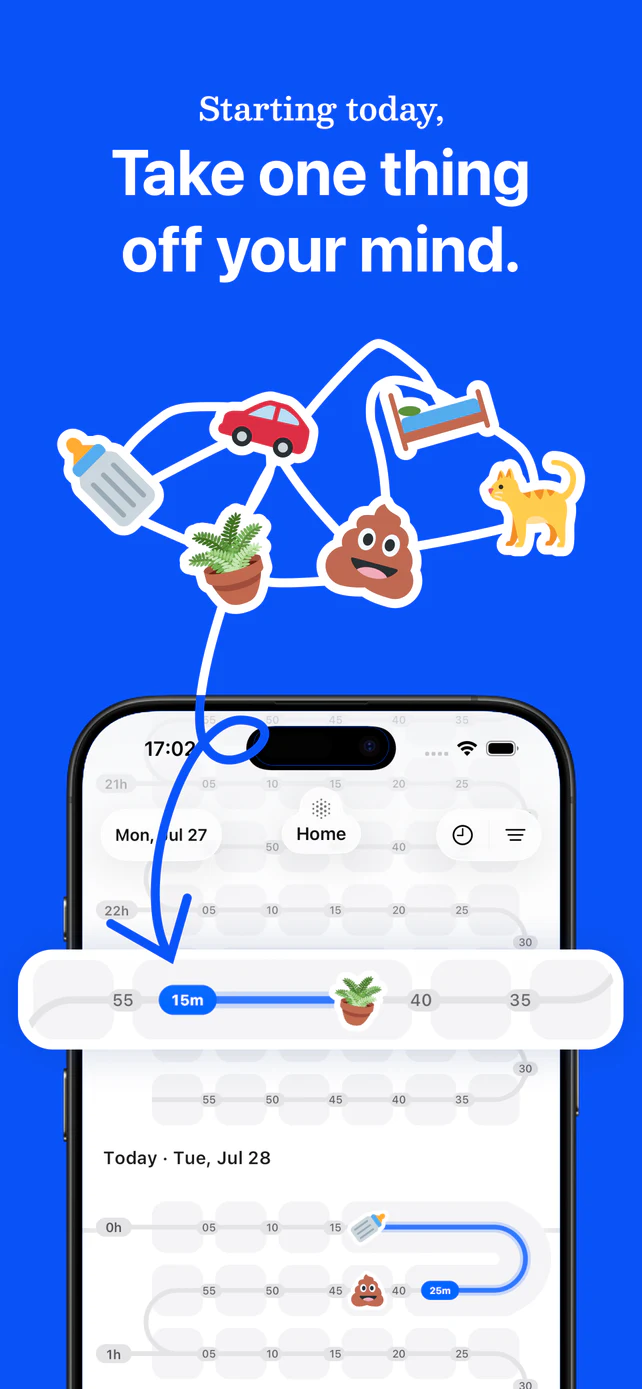
Wen lets an invited caregiver place a factual Sticker on a shared Timeline when a feed happens. The latest mark answers when the event was recorded, while the history remains available to the household. Wen does not calculate intervals or interpret the record.
- Create one plainly named feeding Sticker.
- Mark it only when the event happens.
- Let invited caregivers check the same last-tracked time.
A household log, not feeding advice
Wen does not recommend feeding methods, timing, frequency, quantities, schedules, or products. It does not assess feeding, hydration, weight, symptoms, or a baby's health. Contact an appropriate health professional if you need advice or are concerned, and use any professional record they ask you to keep.
Sources and further reading
- My Feeding JournalUniversity Hospitals Sussex NHS Foundation Trust, 2026. An NHS feeding journal with practical guidance and space to record feeds.
- Breastfeeding Assessment ToolsUNICEF UK Baby Friendly Initiative, accessed 2026. Professional assessment tools intended for use with a midwife, nurse, or health visitor.
Sources last verified 2026-08-08.