


Guide
A Last Time Tracker for the Things That Keep Coming Back
A last time tracker starts with a fact: something happened. That small record gives you a reliable answer later, without turning every part of life into a task or rigid schedule.
What is worth recording?
The best candidates are recurring things that matter later but are easy to forget in the moment. Start with a short list rather than cataloguing your whole life.
- It happens again, but not always on a perfect schedule.
- Knowing the last date helps you decide what to do next.
- More than one person may need the same answer.
- The event is simple enough to record in a few seconds.
- Missing the history creates repeated checking, guessing, or duplicate work.
Start with what happened, not what should happen
Calendars and task lists begin with a plan. A last time tracker begins with a completed occurrence. You record that the water filter was changed, the dog was washed, or the spare sheets were put on the bed. The record is useful even if you never decide on an exact interval.
That difference matters for ordinary care and upkeep. Many recurring things are influenced by weather, visitors, energy, supplies, or simple judgment. A factual history can stay accurate while the next date remains flexible.
A small record removes repeated guesswork
Without a shared or visible record, the same question returns: Was that done last week or last month? You may search messages, ask someone else, inspect the thing itself, or do it again just to be safe. A timestamp turns that fuzzy memory into one quick answer.
Useful examples include replacing a filter, washing bedding, cleaning an appliance, watering a plant, grooming a pet, restocking a household supply, or completing any other recurring event you define. The category is broad, but each record stays concrete.
- Record the occurrence when it happens.
- Check the latest mark when the question comes back.
- Use the history to make your own next decision.
- Add a reminder only when advance attention would genuinely help.
Keep the system lighter than the problem
A tracking system should not create another maintenance project. Use plain names you recognize, avoid unnecessary categories, and remove records that you never consult. The aim is not a perfect archive. It is a dependable answer at the moment you need one.
For shared records, agree on what one mark means. If “changed filter” means the replacement is fully installed, everyone can understand the same history without extra notes or status meetings.
Wen
How Wen helps
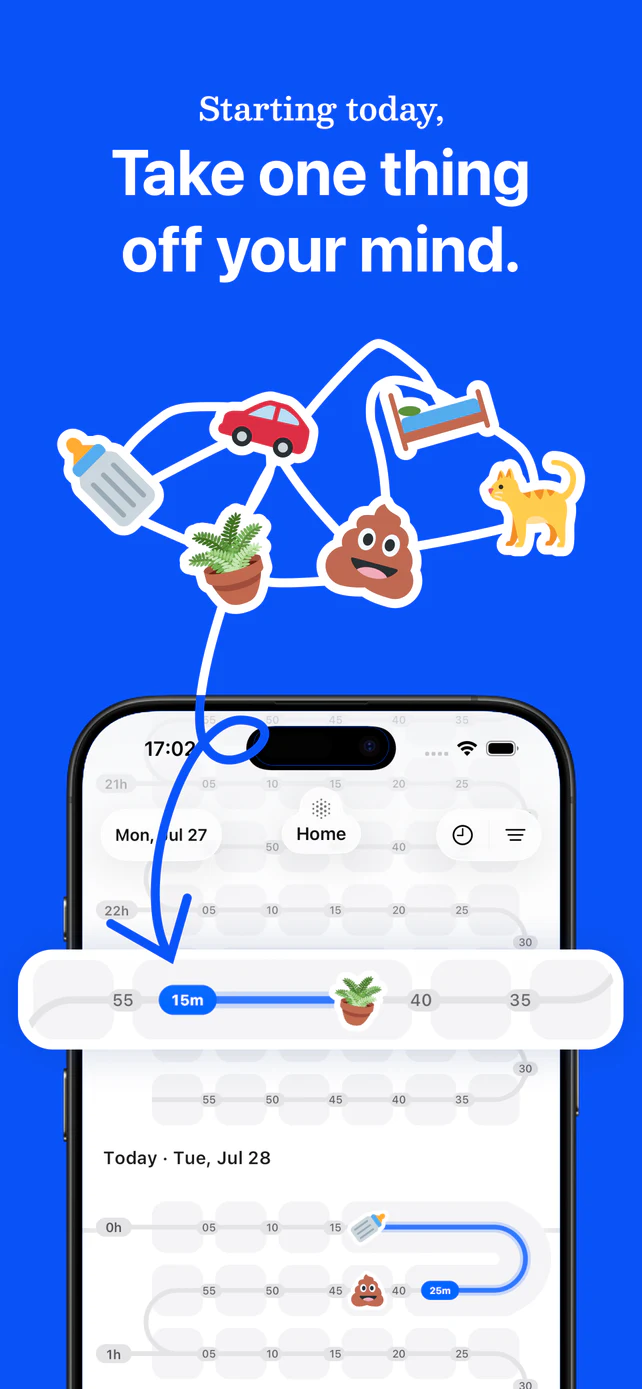
Wen gives this simple loop a visual home. You mark an occurrence on a Timeline with a Sticker, then Wen shows when it was last marked. A Timeline can remain personal or be shared with the people who need that same record. Reminders are optional, so the factual history still works when a fixed schedule does not.
- Choose one recurring thing that currently causes guesswork.
- Mark it when it happens so the Timeline has a factual starting point.
- Check the latest mark later, and add an optional reminder if it earns its place.
What a last time tracker is not
Wen is not a task manager, streak counter, journal, location tracker, or system for scoring how consistently you live. It does not decide what should happen or judge whether an interval is correct. It keeps the record you choose to make and helps you return to it.