


For newborn care handoffs
A Simple Newborn Care Log for Household Handoffs
Wen helps households record what happened. It does not provide medical advice or interpret your baby's care. A simple shared log can answer ordinary handoff questions while each family continues to follow its own clinician's instructions.
Choose only the events your household needs
There is no universal list for a household log. Use plain event names, record only what helps your own handoffs, and follow your clinician's instructions about what matters for your baby.
- A feed happened, without using the log to prescribe timing or quantity.
- A diaper or nappy change happened.
- A bath or another ordinary care event happened.
- A bottle was prepared or pumping equipment was cleaned.
- A recurring baby supply was restocked.
- Clinician-directed vitamin D was given, recorded only as a completed event.
Make the handoff factual and quick
Newborn days can involve several caregivers, interrupted sleep, and many small transitions. A useful household log does not need to explain the whole day. It can simply record that an ordinary event happened and when, so the next caregiver does not have to reconstruct the handoff from memory.
Keep each mark unambiguous. “Diaper changed” or “bottle equipment cleaned” is easier to share than a vague note such as “baby sorted.” If your family needs details beyond a timestamp, use the system recommended by your clinician rather than assuming a general-purpose log is sufficient.
Keep feeding and care records descriptive
A household may choose to record that a feed, diaper change, bath, or cleaning event occurred. The log should not turn those marks into a schedule, target, warning, or judgment. It cannot know what is appropriate for a particular baby.
The same restraint applies when patterns appear in the history. A sequence of timestamps is not a diagnosis. Do not use Wen to interpret feeding, sleep, hydration, growth, symptoms, medication, or any other health question. Contact an appropriate health professional when you need care advice or are concerned.
- Use event names that describe only what happened.
- Avoid labels that imply good, bad, enough, late, or overdue.
- Do not infer health status from gaps or frequency.
- Keep clinician-requested records in the format the clinician asks for.
Why vitamin D may appear in a household log
Some caregivers are instructed by their clinician or local health service to give vitamin D and want to record whether that event happened. Health authorities discuss vitamin D in relation to infant vitamin D status, bone development, and prevention of deficiency. Clinical guidance varies by feeding, location, health, and local policy.
Research also examines vitamin D status and bone-related outcomes in infants, including randomized trials and evidence reviews. Those sources explain why the topic exists in newborn care, but this page does not turn them into instructions. Wen can record a clinician-directed event. It does not determine who should receive vitamin D, which product to use, how much to give, or when to give it. Follow the instructions from your own qualified clinician or local health authority.
Use separate records for separate handoff questions
A single crowded baby log can become harder to scan than the memory problem it was meant to solve. Keep event names distinct, use only the ones your household actually checks, and archive anything that stops being useful.
Sharing should also be deliberate. Invite only the caregivers who need the Timeline. A shared care record is not a public family diary, a development journal, or a way to monitor another caregiver's performance.
Wen
How Wen helps with household handoffs
Wen lets a household mark a chosen care event with a Sticker on a shared Timeline. The latest mark answers when that event was recorded, and the history remains available to invited members. Families define their own labels. Optional reminders are separate from the factual record and must never be treated as clinical instructions.
- Choose one ordinary handoff question your household repeatedly asks.
- Give the event a plain factual label and mark it only when it happens.
- Share the Timeline with the caregivers who need the same answer.
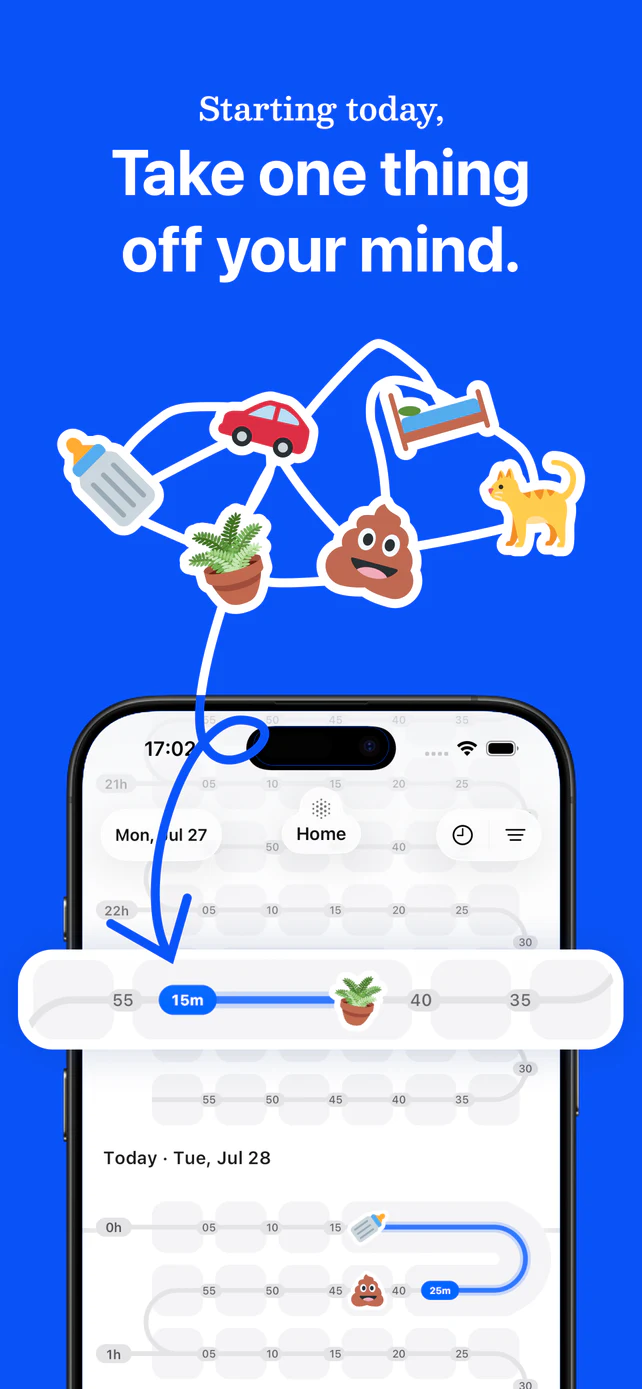
Logging only, never care advice
Wen does not recommend feeding, sleep, supplement, medication, health, or safety schedules. It does not calculate quantities, interpret patterns, detect problems, or replace a clinician, emergency service, or professional care record. If you need advice or are worried about a baby, contact an appropriate health professional.
Sources and further reading
- Vitamin D and BreastfeedingUS Centers for Disease Control and Prevention, 2025. Official context on vitamin D, infant bone development, and deficiency prevention.
- Vitamin D supplementation for infantsWorld Health Organization, accessed 2026. International evidence and policy context.
- Effect of Higher vs Standard Dosage of Vitamin D3 Supplementation on Bone Strength and Infection in Healthy InfantsJAMA Pediatrics, 2018. Randomized clinical trial examining vitamin D status, bone strength, and infection outcomes.
- Vitamin D supplementation for term breastfed infants to prevent vitamin D deficiency and improve bone healthCochrane Database of Systematic Reviews, 2020. Evidence review that includes the limits and certainty of available research.
Sources last verified 2026-08-08.