


For households
A Shared Household Record for the Things That Repeat
A household often needs one answer more than it needs another plan: when did this last happen? A shared factual record can prevent duplicate work, repeated questions, and uncertain handoffs.
Choose a calm first shared record
Start with a few recurring things where shared visibility is clearly useful. The record should reduce coordination, not create a new household administration job.
- Everyone involved understands what one completed mark means.
- The latest occurrence is more useful than a detailed task workflow.
- Two people might otherwise repeat the same work or ask the same question.
- The information is appropriate to share with this particular household group.
- Recording it takes less effort than reconstructing it later.
One source of truth for ordinary handoffs
Shared homes are full of small handoffs. Someone changes the bedding, replaces a filter, cleans the coffee machine, waters the plants, or restocks a supply. The action is complete, but the information often stays with the person who noticed it.
A shared household record makes the completed event visible without requiring a message or meeting. The next person can look up the latest mark instead of interrupting someone, searching a chat, or assuming it was handled.
Share the record, not every part of life
Useful household sharing is scoped. A couple may want one place for home upkeep. Parents may want a separate record for everyday baby-care handoffs. Housemates may only need a few shared appliances and supplies. These do not have to become one giant family dashboard.
Choose a boundary people can understand. Keep private records private, and share only the Timeline whose history is genuinely useful to the group. Shared visibility should answer a practical question, not become a way to monitor another person.
- Bedding, towels, and other recurring laundry changes
- Filters and ordinary appliance upkeep
- Plant watering or pet-care events
- Household supplies that are easy to assume someone else replaced
- Family-defined care events where a simple handoff matters
Avoid turning history into a scorecard
A factual record says that something happened and when. It does not automatically say who should have done it, whether work was distributed fairly, or whether someone performed well. Those are different conversations and need more context than a timestamp can provide.
Use names that describe the event rather than the person. “Watered kitchen plants” is clearer and calmer than a label that embeds an assignment. If a record starts creating tension or surveillance, narrow its scope or stop sharing it.
Wen
How Wen helps a household
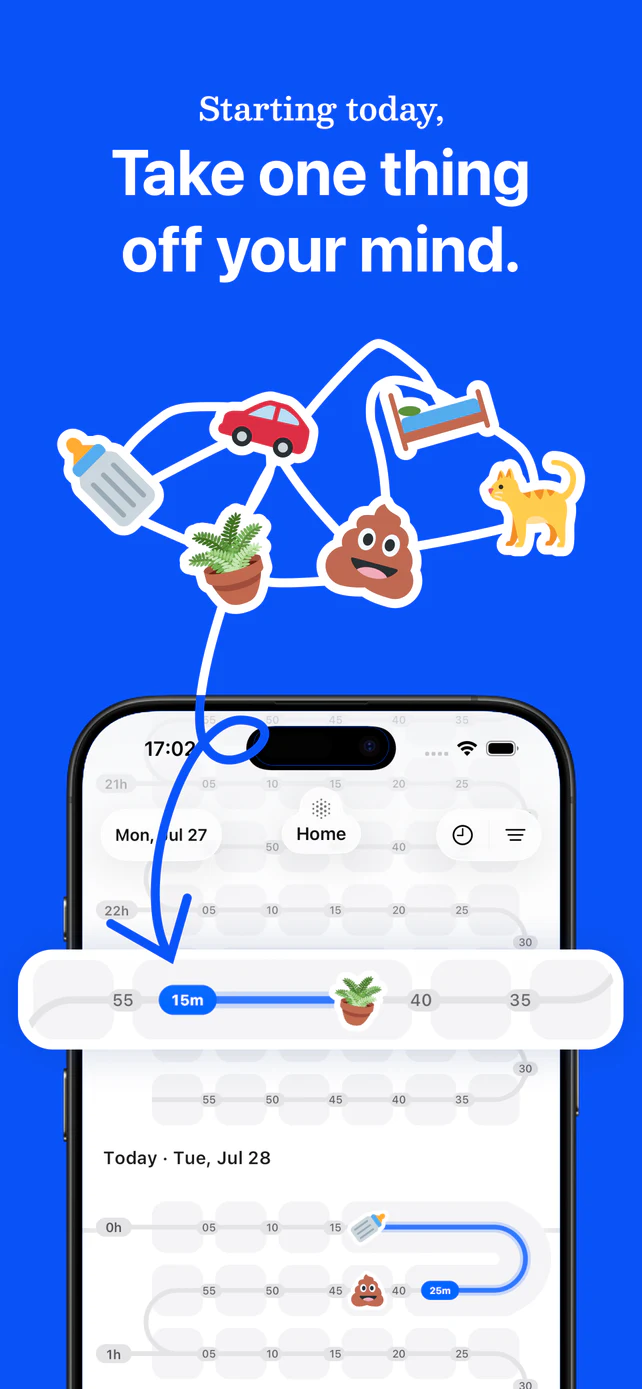
Wen organizes occurrences on Timelines. A Timeline can be personal or shared with invited people, so each household can choose the right boundary. When someone marks a Sticker, the shared history answers when it last happened. An optional reminder can help one person remember a future point without redefining the shared history as a task assignment.
- Create one Timeline for a clear household area or kind of care.
- Invite only the people who need that record.
- Mark real occurrences and let the latest mark handle the next handoff.
Sharing without surveillance
Wen does not provide GPS tracking, passive monitoring, household productivity scores, automatic assignments, or proof that work was done correctly. Sharing is for a chosen factual Timeline, not for watching where people are or evaluating their behavior.