


Tracking one thing
Track When You Last Changed Your Pillowcase
A pillowcase change tracker answers a small household question: when was this pillowcase last changed? Wen keeps that occurrence factual and shareable. It does not judge cleanliness, assess symptoms, or turn conditional bedding guidance into a reminder rule.
Make the pillowcase record specific
Choose the item and event your household actually wants to remember. A clear record is more useful than a general bedding label that hides several different meanings.
- Name the person, room, bed, or pillowcase clearly.
- Decide whether “changed” means a fresh pillowcase was put on or a different event was completed.
- Use separate records for a pillowcase, pillow protector, and pillow when those questions differ.
- Mark the record after the selected event is complete.
- Keep any care-label instructions outside the factual timestamp.
Why the last date is easy to lose
Pillowcases are often changed as part of a larger laundry load. Someone may remove one, wash it, and put another on later, while another household member assumes the whole bed was handled at the same time. A confirmed mark preserves the small fact that memory tends to blur.
Separate records help when bedrooms, people, pets, spare sets, or guest beds follow different household routines. Wen does not need to turn those differences into a single schedule.
Keep bedding guidance in its proper context
The CDC discusses allergen-proof pillowcase covers and weekly bedding washing in guidance for people managing dust-mite-triggered asthma. That is condition-specific context, not a universal pillowcase interval for every household.
A randomized trial of impermeable bedding covers in people with dust-mite-sensitized allergic rhinitis reduced measured mite allergens in mattresses, but the single intervention did not significantly improve the clinical outcomes studied. It did not test pillowcase logging or Wen.
Sources: Controlling Asthma, Evaluation of impermeable covers for bedding in patients with allergic rhinitis
Record the occurrence, not a health conclusion
A useful mark means “this selected pillowcase was changed.” It does not mean the pillowcase is clean enough, suitable for a particular person, or likely to change skin, sleep, allergy, or asthma outcomes.
If a person has an individual care question, a clinician or the item's manufacturer may be the right source. Wen keeps the household history separate from that judgment.
Source: Environmental assessment and exposure control of dust mites: a practice parameter
Wen
How Wen helps track pillowcase changes
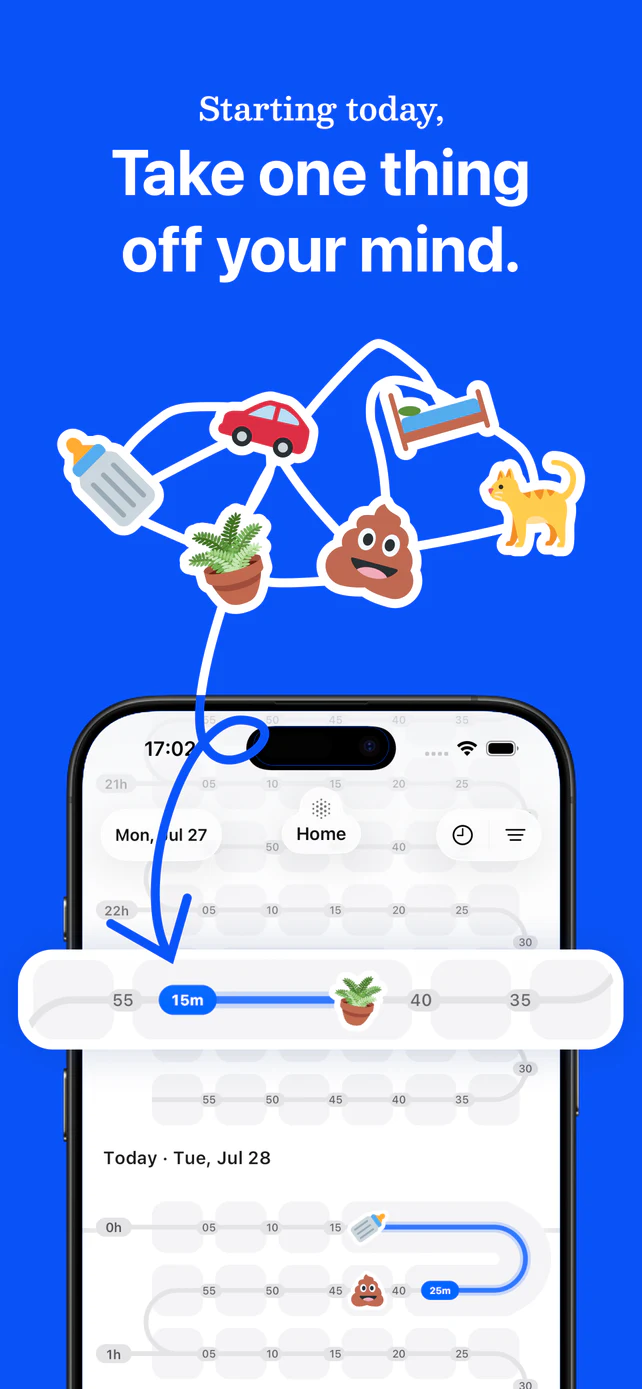
Wen lets a household mark a plainly named pillowcase Sticker on a Timeline. The latest mark answers when that occurrence was recorded, while invited people can see the same history. Wen does not inspect the fabric, measure allergens, or choose a bedding routine.
- Create one Sticker for the selected pillowcase or bedding question.
- Mark it when the chosen change is complete.
- Check Last Tracked later instead of reconstructing the laundry load from memory.
A household record, not allergy or skin advice
Wen does not prescribe pillowcase frequency, assess cleanliness, prevent allergies or asthma, diagnose skin conditions, or decide when someone should seek care. Follow relevant care labels and professional guidance for individual circumstances.
Sources and further reading
- Controlling AsthmaUS Centers for Disease Control and Prevention, 2024. Condition-specific asthma-trigger guidance that mentions pillowcase covers and weekly bedding washing; not a universal household interval.
- Evaluation of impermeable covers for bedding in patients with allergic rhinitisNew England Journal of Medicine, 2003. Randomized trial in dust-mite-sensitized allergic-rhinitis patients; it studied bedding covers, not changing or tracking, and did not find significant clinical benefit from the single intervention.
- Environmental assessment and exposure control of dust mites: a practice parameterJoint Task Force on Practice Parameters, 2013. Clinical dust-mite exposure guidance that may not be appropriate for every patient; not household logging guidance.
Sources last verified 2026-08-08.