


Tracking one thing
Track When Your Baby's Last Bath Was Recorded
A baby-bath tracker answers a narrow household question: when was the last full bath recorded? Wen keeps that occurrence shared and factual. It does not decide whether a baby needs a bath, assess skin, or verify water safety.
Define what counts as a bath
Use a clear household label so a full bath is not silently combined with a sponge wash, top-and-tail wash, hair wash, or diaper-area cleaning.
- Record the completed full-bath event and when it was marked.
- Use a plain label that every caregiver recognizes.
- Keep sponge washing, top-and-tailing, hair washing, and diaper-area cleaning separate.
- Keep water-safety and product instructions with the relevant professional source.
- Do not treat a timestamp as proof that a baby was clean, comfortable, healthy, or safe.
Why caregivers may record a baby's last bath
Bathing can be a shared household event that is easy to lose track of when care moves between adults. A simple timestamp answers the handoff question without requiring anyone to reconstruct the day from memory.
The AAP and NHS discuss full baths alongside partial washing and other newborn-care questions. That distinction supports a narrow event label rather than one record that claims to represent every kind of washing.
Sources: Bathing Your Baby, Bathing your baby
Keep source safety guidance separate from the log
Infant-bathing sources include water-safety and supervision guidance. Those instructions belong to the public-health or safety source and should not be rewritten as a Wen feature or treated as something a timestamp can verify.
A link to the relevant source can provide context for readers. Wen records only that the household marked its chosen bath event; it does not check the water, tub, products, temperature, supervision, skin, or umbilical cord.
Sources: Bathing your baby, CPSC Approves New Federal Safety Standard for Infant Bath Tubs
Do not turn the history into a routine
The AAP and NHS provide audience-specific guidance about bathing frequency and care. Those statements are not a universal Wen interval, and a missed or later mark is not a care judgment.
Use the record to answer when the event was marked. Keep questions about frequency, skin, cord care, products, water, or a baby's health with an appropriate professional source.
Sources: Bathing Your Baby, Bathing your baby
Wen
How Wen helps track a baby's bath
Wen lets an invited caregiver mark a bath Sticker on a shared Timeline after the household's chosen full-bath event. The latest mark answers when it was recorded, while invited caregivers can find the same history later. Wen does not assess the bath or provide safety instructions.
- Create one clearly named bath Sticker.
- Mark it after the full-bath event happens.
- Keep partial washing and water-safety questions separate from the timestamp.
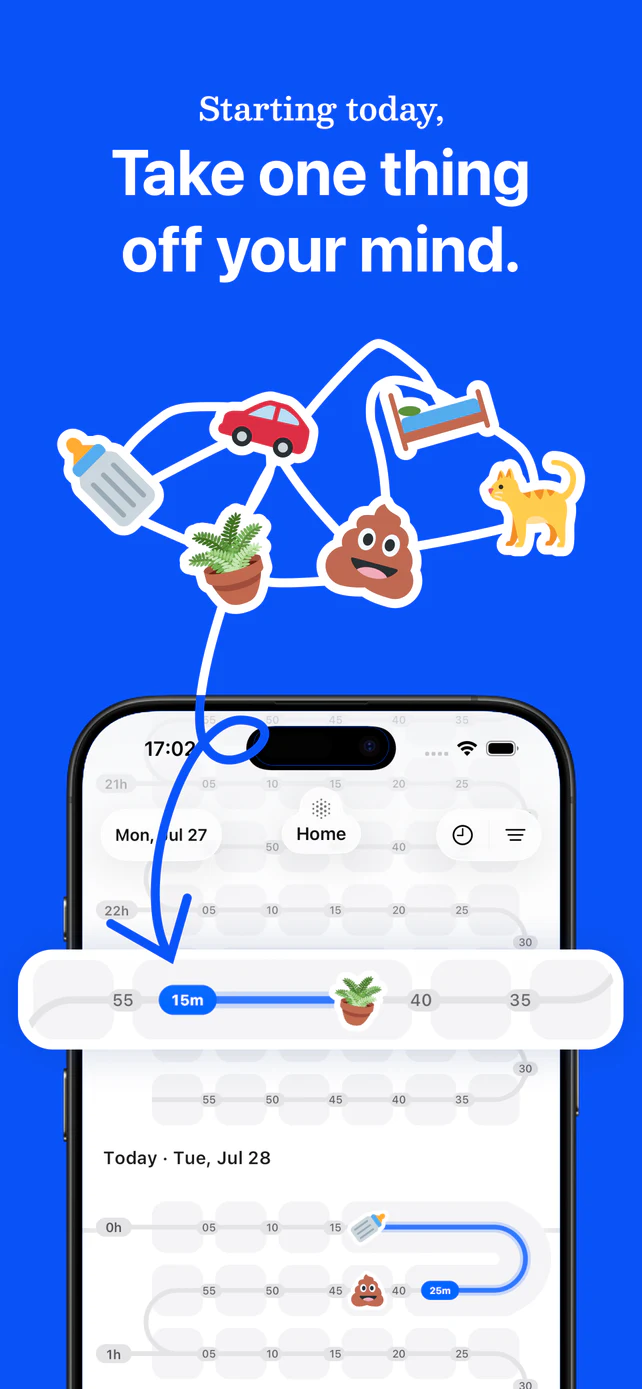
A handoff record, not bathing advice
Wen does not recommend bath frequency, water temperature, products, tubs, supervision, cord care, or skin care. It does not verify that a bath was safe or replace professional guidance about a baby.
Sources and further reading
- Bathing Your BabyAmerican Academy of Pediatrics, HealthyChildren.org, accessed 2026. Pediatric context on newborn bathing, partial washing, skin, cord, frequency, and water safety.
- Bathing your babyUK National Health Service, accessed 2026. Public-health context distinguishing full baths from top-and-tailing and emphasizing infant water safety.
- CPSC Approves New Federal Safety Standard for Infant Bath TubsUS Consumer Product Safety Commission, 2017. Safety-authority context on drowning risk and supervision; a timestamp cannot verify safety.
Sources last verified 2026-08-08.