


Tracking one thing
Track When You Last Replaced Your Kitchen Sponge
A kitchen-sponge replacement tracker answers a small household question: when did we last replace this sponge? Wen keeps that event factual and shareable. It does not decide whether a sponge is safe, clean, contaminated, or due for replacement.
Define the sponge event clearly
A kitchen may use several sponges for different jobs. Name the item and record the completed event without silently combining replacement, washing, sanitising, or moving it to another task.
- Name the sink, kitchen, person, or task clearly.
- Decide whether the mark means “sponge replaced” or a different household event.
- Use separate records for dish sponges, surface sponges, and replacement heads.
- Mark the record after the new sponge is in use.
- Keep food-safety guidance and product-care instructions separate from the timestamp.
Why the last replacement date is easy to forget
Sponges are small, inexpensive, and often replaced during an ordinary kitchen task. One person may discard one while another person assumes the current sponge is the same one as yesterday. A factual mark preserves the handoff without asking anyone to remember the whole cleaning load.
Separate records can help when a household uses different tools for dishes, counters, bottles, or other surfaces. Wen records the event the household chooses to name.
Keep food-safety guidance in its proper scope
Health Canada advises avoiding sponges because they are harder to keep bacteria-free, and separately discusses changing dishcloths to reduce cross-contamination. That is government food-safety guidance, not a replacement timer generated by Wen.
The UK Food Standards Agency says sponges and other kitchen cloths should be washed or changed regularly and describes dirty, damp cloths as a place where bacteria can breed. The guidance applies in its stated context and does not define one lifespan for every household sponge.
Sources: Food safety and you, Student guide to food safety and hygiene
Research explains the context, not your next date
Studies have found diverse bacterial communities in used household sponges and have compared moisture and survival conditions in sponges and brushes. These studies did not test Wen, establish a household illness rate, or prove that one elapsed time makes an individual sponge unsafe.
A source can explain why people want to remember the event. It cannot turn a household timestamp into a food-safety verdict.
Sources: Microbiome analysis and confocal microscopy of used kitchen sponges reveal massive colonization by Acinetobacter, Moraxella and Chryseobacterium species, Dishwashing sponges and brushes: consumer practices and bacterial growth and survival
Record replacement, not a cleanliness conclusion
A useful mark means “this named sponge was replaced.” It does not mean the sponge was clean, safe, contaminated, or suitable for a particular food-contact task before or after the mark.
If your household needs to keep a formal food-safety record, use the format and instructions provided by the relevant authority or professional. Wen keeps a lightweight occurrence history.
Wen
How Wen helps track sponge replacement
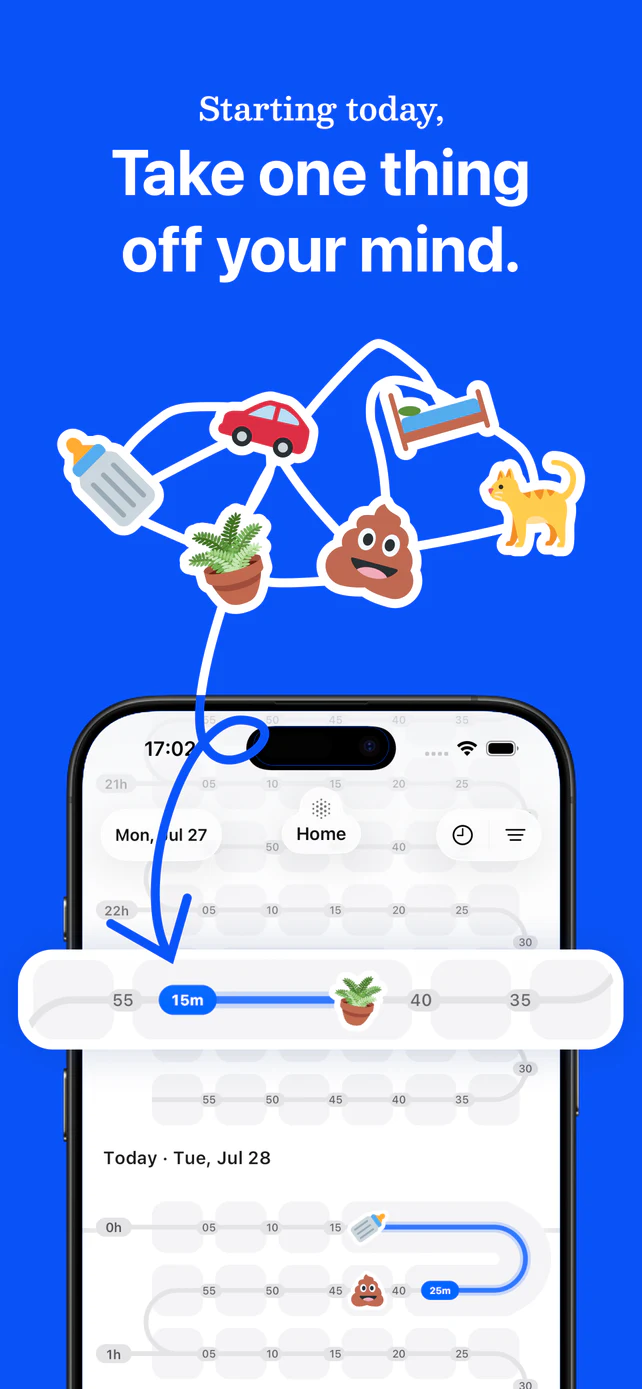
Wen lets a household mark a plainly named kitchen-sponge Sticker on a shared Timeline. The latest mark answers when the replacement was recorded, while invited people can see the same history. Wen does not inspect the sponge, measure bacteria, or decide whether food is safe.
- Create one Sticker for the named sponge or kitchen task.
- Mark it when the replacement is complete.
- Check Last Tracked later instead of guessing who replaced it.
A replacement record, not food-safety advice
Wen does not prescribe sponge frequency, assess contamination, verify cleaning, prevent foodborne illness, or decide whether a sponge is safe to use. It records the household event you choose and helps you find it later.
Sources and further reading
- Food safety and youHealth Canada, 2026. Official consumer food-safety guidance that addresses avoiding sponges and reducing cross-contamination; not a universal replacement interval.
- Student guide to food safety and hygieneFood Standards Agency, 2026. Official UK guidance about washing or changing kitchen cloths; not a universal household sponge lifespan.
- Microbiome analysis and confocal microscopy of used kitchen sponges reveal massive colonization by Acinetobacter, Moraxella and Chryseobacterium speciesScientific Reports, 2017. Primary study of 14 German household sponges; small observational sample with no illness outcomes or universal replacement schedule.
- Dishwashing sponges and brushes: consumer practices and bacterial growth and survivalInternational Journal of Food Microbiology, 2021. Primary survey and laboratory study; no Wen evaluation, household illness outcomes, or universal replacement interval.
Sources last verified 2026-08-08.